
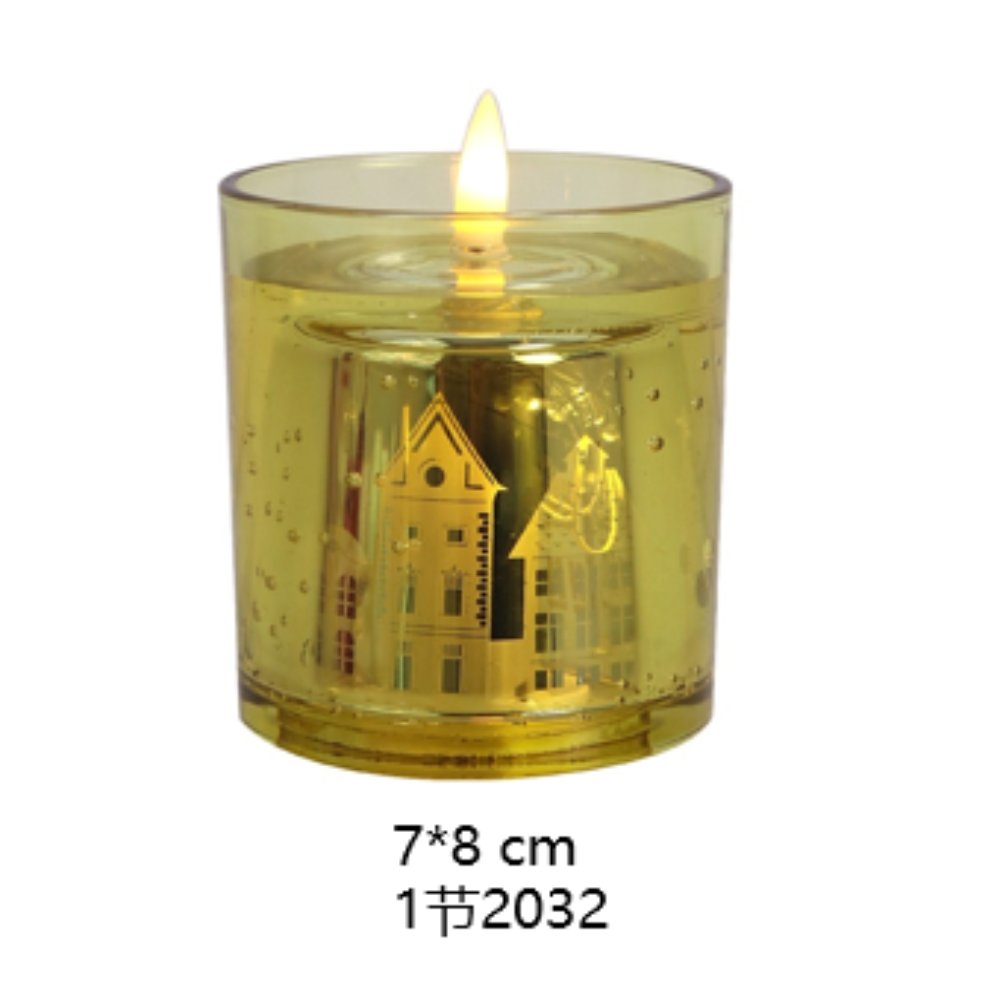
House LED Candle RFQs: Match Size and Weight
House Light & Shadow catalogue reference, with a 7×8 cm image annotation. Ask how that reference relates to the product page’s full size and weight entries.
For the House Light & Shadow LED Candle Holder, ask the supplier to match each offered size to its corresponding weight and version reference. The product page presents three dimensions and three weights as separate slash-separated lists. Keep those source lists intact until the supplier confirms the pairings; do not turn their displayed order into an assumed specification table.
This is a specific RFQ task for wholesale real wax LED cups: identify the actual size-and-weight relationship behind the catalogue entries. A purchasing colleague should be able to select a named House version and find its supplier-confirmed dimensions, weight statement and sample reference on the same line. A decorative photograph alone cannot supply that relationship.
Retain the two original lists
The House Light & Shadow product page lists Dimensions: 7×7×8 cm / 8×8×9 cm / 10×10×10 cm. Its separate Weight entry reads 0.31 kg / 0.48 kg / 0.78 kg. Copy both entries into the enquiry background without silently rearranging or joining them.
The page also identifies a cylindrical shape and uses LED Candle as its type. Those fields help identify the product being discussed, but they do not complete the missing association between a dimension entry and a weight entry. Ask for the supplier’s version identifier so that the answer refers to merchandise the supplier is actually proposing.
Request one confirmed association for each size
Prepare a schedule that starts with the three listed dimension entries and leaves the corresponding weight cells open. Ask the supplier to fill those cells and add the relevant item or version code. If the proposed sizes differ from the catalogue list, request the revised size reference explicitly rather than forcing a new offer into an old row.
Catalogue dimension entry
Matching weight
Version and sample
7×7×8 cm
Supplier to confirm
Supplier to identify
8×8×9 cm
Supplier to confirm
Supplier to identify
10×10×10 cm
Supplier to confirm
Supplier to identify
Keep the original weight list beside this schedule: 0.31 kg / 0.48 kg / 0.78 kg. The open cells are deliberate. A smaller-looking item may suggest a possible match, but that is not the same as a supplier-confirmed pairing. Record the actual response and identify any entry the supplier cannot yet resolve.
Separate Green Christmas Tree vessel catalogue reference. Its Dia7×H8cm and 0.16kg page entries belong to that product, not to a House LED candle size.
Clarify the reference behind each paired value
For each confirmed row, ask what the dimension sequence describes and which axes the supplier uses. The catalogue uses three-number dimension entries, while the House image includes a shorter 7×8 cm annotation. Ask the supplier to reconcile those references for the identified version. Do not treat the shorter annotation as proof that all three dimensions or every offered size have been checked.
Keep the supplier’s weight description with the row as well. Ask which identified item or supplied configuration the stated weight covers. This supports the size-to-weight association without presenting the catalogue values as independently measured net weights. Where the supplier supplies a measurement record, retain its date and sample reference so later revisions remain distinguishable.
Keep decorative-vessel references on their own records
Gemlux also lists separate decorative candle vessels, including the Green Christmas Tree vessel and Rose Gold Star vessel. Their retained page entries include Dia7×H8cm and 0.16kg. These are separate products, shown here for category comparison, and their values do not fill a missing House-candle cell.
Use the complete product name or supplier code when moving an answer into the schedule. Similar cylindrical forms and decorative finishes can make catalogue references look related, but they do not establish identical dimensions, mass or supplied contents. Keeping the product identity on every row avoids importing a vessel value into the LED-candle enquiry.
Separate Rose Gold Star vessel appearance for category comparison. A similar decorative form does not establish a House candle’s matching size, weight or included components.
Link the finished schedule to the actual sample
Ask the supplier to identify which sample represents each offered House row. Keep a dated image and the sample identifier with the confirmed pairing. If the supplier provides one sample as a reference for only one size, state that scope. Do not extend its confirmed values to the remaining sizes without the corresponding response.
Retain the original dimension and weight lists.
Obtain each supplier-confirmed size-to-weight association.
Identify the offered version and the reference behind its values.
Attach the applicable sample and dated revision to the RFQ line.
A useful RFQ note is: Please confirm the matching weight and version reference for each listed House candle size. Explain the dimension sequence, identify what the weight statement covers, and link the response to the proposed sample. Mark any alternative size or unresolved value separately before quotation acceptance. This asks for a concrete schedule without inventing a matching order.
Frequently asked questions
Can the three sizes and three weights be paired by order?
Retain the displayed lists, but ask the supplier to confirm each association. The separate entries alone do not establish that correspondence.
Does the 7×8 cm image annotation resolve all sizes?
No. Ask how that annotated reference relates to the identified House version and the three-number dimension entries on the page.
Can the 0.16kg vessel entry complete the House schedule?
No. It belongs to the separately named decorative-vessel references. Use the House supplier response for the House size-and-weight pairing.
House LED candlesize-weight pairingB2B RFQ