
Candle Cup Capacity: Name the Fill Reference
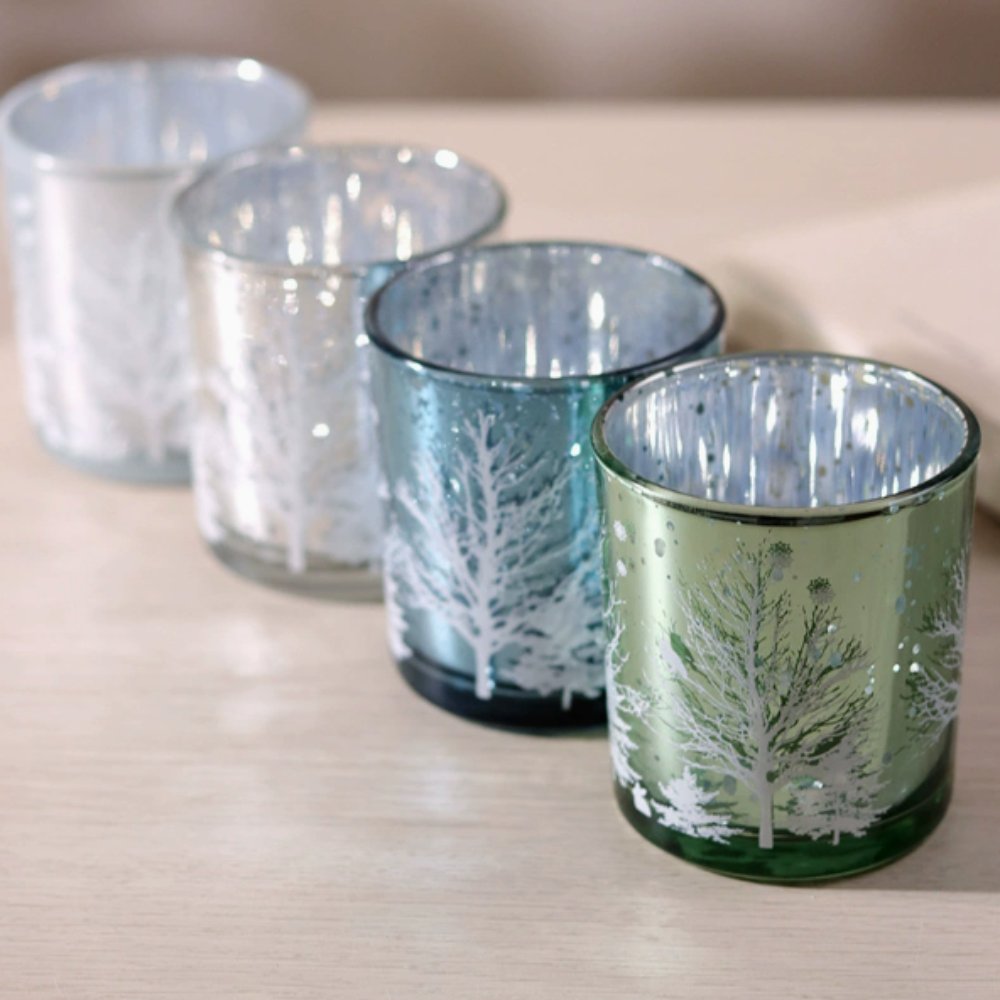
Tree-pattern gallery vessels in a separate row arrangement. Their visible rims are appearance references, not marked capacity or fill-level measurements.
For a candle cup capacity enquiry, ask for a volume value tied to a defined fill reference and identified vessel. Gemlux’s Green Christmas Tree Candle Vessel page lists Dia 7 × H 8 cm and a Weight entry of 0.16kg, but gives no capacity value. Request the supplier’s capacity definition and sample basis rather than derive an unconfirmed millilitre figure from those catalogue fields.
This creates a usable purchasing answer when a buyer needs to compare empty vessels. A volume stated at the brim and a volume stated at another agreed reference level describe different conditions. Name the condition with the number. The record should explain what the proposed capacity means for the exact offered cup, without turning a decorative photograph into a measuring reference.
Identify the vessel before requesting its volume
Link the Green Christmas Tree Candle Vessel page in the enquiry and identify the selected version. It describes Glass as the material and Electroplating as the finish. Retain its Dia 7 × H 8 cm entry with the product reference. Ask the supplier which measurement locations that dimensional entry represents if they matter to the capacity discussion.
The page’s broad variant list and gallery provide several decoration references. Give the actual proposed cup its own sample or item identifier. Ask whether the returned capacity information applies to that selected version. A shared catalogue presentation or an apparently similar body shape should not silently extend one sample’s value across an entire assortment.
Put the fill reference beside the capacity figure
Ask whether a proposed value refers to a brimful condition or another defined level. Request a drawing, marked view or written description that locates the chosen reference on the identified vessel. Keep the reference and units next to the value, so another purchasing colleague can understand it without reconstructing the conversation.
Capacity field
Question for the supplier
Record to retain
Offered vessel
Which exact cup and version?
Product and sample identifier
Volume value
What capacity is proposed, with stated units?
Returned value and its description
Fill reference
Brimful or which other defined level?
Marked location or clear description
Basis
Declared figure or an identified sample result?
Supplier explanation and applicable method
Configuration
Which supplied state does the value represent?
Confirmed sample configuration
Keep a supplier declaration and a measured sample response distinguishable. If the answer represents a particular sample, ask the supplier to identify it and describe the basis used. If the buyer needs an acceptable range, request a proposal for the selected construction and review it explicitly. The catalogue does not establish a universal capacity allowance.
Illuminated catalogue arrangement. It does not identify a capacity method, supplied lighting components or a confirmed filled-product configuration.
Keep dimensions and weight in their own fields
The listed diameter and height help identify the product, but the page does not provide the internal geometry and fill reference needed for a stated volume. Avoid treating the visible cup as an ideal geometric container and assigning the result to the supplier’s offer. Ask for the actual volume response required by the purchasing brief.
Likewise, the 0.16kg Weight entry is not a capacity statement. Keep it in a separate mass field with its own confirmed basis. A supplier’s response about weight should not close an unanswered volume question simply because both relate to the same vessel. Separate fields let the buyer review each requested quantity for its intended purpose.
Keep the selected vessel and sample identifiable.
State the capacity unit and named fill reference together.
Retain the supplier’s declared or sample-measured basis.
Keep dimensional and weight questions separate from volume.
Use the returned definition for a comparable enquiry
If two offers provide capacity values, compare their reference conditions before comparing the numbers. Ask for clarification when one answer is brimful and the other uses an unnamed line. Retain the original responses while resolving the difference. Changing the field heading to a shared word such as capacity does not make the underlying definitions equivalent.
A proposed vessel change should receive a fresh capacity reference where relevant. Keep the selected sample, defined level and returned value with the purchase specification. This makes a later discussion about the offered cup more precise than relying on the appearance of another colour or motif in a mixed catalogue scene.
The empty-cup procurement guide supports the wider supplied-component discussion. Link the capacity record to that agreed vessel scope. A volume definition remains a purchasing field; it does not establish the suitability of a filling formulation or replace any product-specific evaluation required for the intended application.
Send a clear capacity request
An enquiry can read: “For the linked Green Christmas Tree vessel and offered version, please provide the capacity value with its unit and defined fill reference. Identify whether the answer is a declared figure or a result for a named sample, describe the applicable basis, and mark the reference level. Please keep the dimensional and weight entries separately identifiable.”
Send the selected reference through the Gemlux contact page. Buyers sourcing wholesale Christmas tree candle empty cups can then retain a capacity answer that names the vessel, level and basis instead of an unsupported number inferred from a decorative display.
Another official gallery setting. The surrounding tableware is styling context and does not establish supplied accessories or a vessel capacity.
Frequently asked purchasing questions
Can Dia 7 × H 8 cm be converted into the offered capacity?
Request the supplier’s actual volume definition and basis. The page does not provide an internal-volume specification or fill reference.
Should a brimful value and another fill level be compared directly?
First reconcile the reference conditions. Keep the defined level beside each returned capacity value.
Does the 0.16kg entry answer the volume question?
It is a separate weight entry. Ask for the capacity information in its own field.
What should remain with the selected capacity reference?
The offered vessel, identified sample or declaration, volume units, fill reference and applicable basis.
Candle CupCapacity ReferenceVessel RFQ